
You are browsing past revisions for this area.

Date Editor Preview
View More Revisions
You are previewing another version of this material. This will not become the current version unless you click "Save As Current Revision." If you change your mind, click "Cancel."

Pogil - Process Oriented Guided Inquiry Learning

What is process oriented guided inquiry learning (POGIL)?


POGIL is a classroom and laboratory technique that seeks to simultaneously teach content and key process skills such as the ability to think analytically and work effectively as part of a collaborative team.

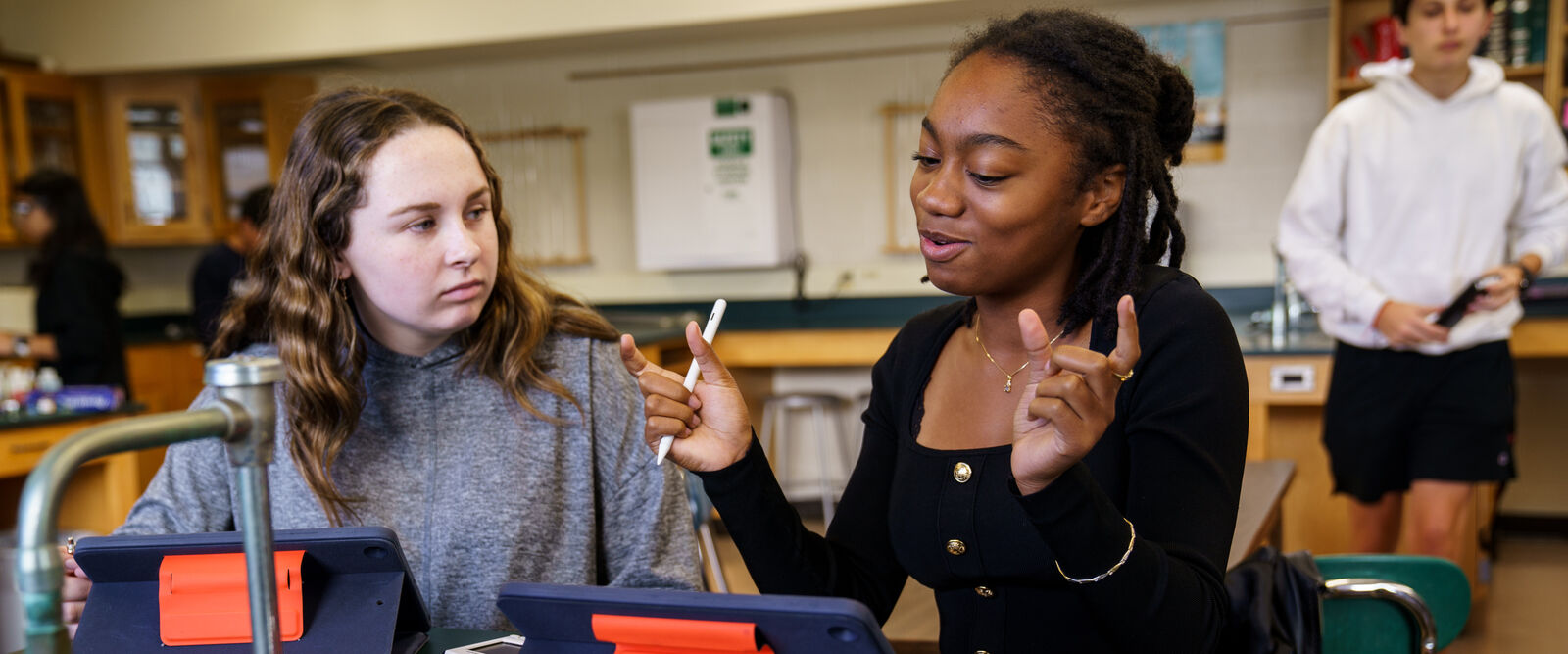
 A POGIL classroom or lab consists of any number of students working in small groups on specially designed guided inquiry materials. These materials supply students with data or information followed by leading questions designed to guide them toward formulation of their own valid conclusions—essentially a recapitulation of the scientific method. The instructor serves as facilitator, observing and periodically addressing individual and classroom-wide needs.

POGIL is based on research indicating that a) teaching by telling does not work for most students, b) students who are part of an interactive community are more likely to be successful, and c) knowledge is personal; students enjoy themselves more and develop greater ownership over the material when they are given an opportunity to construct their own understanding.

We have found that a discovery-based team environment energizes students and provides instructors with instant and constant feedback about what their students understand and misunderstand. Students quickly pick up the message that logical thinking and teamwork are prized above simply getting “the correct answer.” This emphasizes that learning is not a solitary task of memorizing information, but an interactive process of refining one’s understanding and developing one’s skills.

  • Previous
  • Next
    • Facilitation in a High School setting
    • Facilitation in a High School setting
    • POGIL working group, in a Chemistry classroom at F&M
    • POGIL working group, in a Chemistry classroom at F&M
    • Lancaster Country Day
    • Lancaster Country Day
    • Tools for implementing
    • Tools for implementing
    • Group Work
    • Group Work
    • St Paul, MN
    • St Paul, MN

What is the POGIL Project?

The POGIL Project is a NSF-funded professional development organization for educators. There are numerous ways for interested educators to take advantage of the project:

  • Attend a 1 or 3-day regional or national workshop.
  • Use peer-reviewed and classroom-tested POGIL materials in your classroom, laboratory or recitation session.
  • Apply for an on-site consultation in which POGIL experts will help you adapt the POGIL approach to your unique institutional setting.
  • Receive support to visit a site currently implementing a POGIL approach.
  • Consult with a POGIL expert by phone, Internet, or email.
  • Join a POGIL Regional Network to consult with, collaborate with, and support other members.

More experienced practitioners may also:

  • Contribute to development of new materials
  • Serve on various committees to provide support to new adopters

Since the beginning of the Project, we have held over 250 workshops attended by about 6500 people.

What makes POGIL different?

There are a number of student-centered instructional techniques that can be effective for achieving valid learning goals in the classroom.  POGIL differs from other approaches in its use and design of distinct classroom materials.  Three characteristics of POGIL materials are as follows:

  • POGIL materials are designed for use with self-managed teams that interact with the instructor as a facilitator of learning rather than as a source of information.
  • POGIL materials guide students through an exploration to construct understanding.
  • POGIL materials use discipline content to facilitate the development of higher-level thinking skills and the ability to learn and apply knowledge in new contexts.